
loader image

Estrus Intensity link to reducing pregnancy loss

May 20, 2024

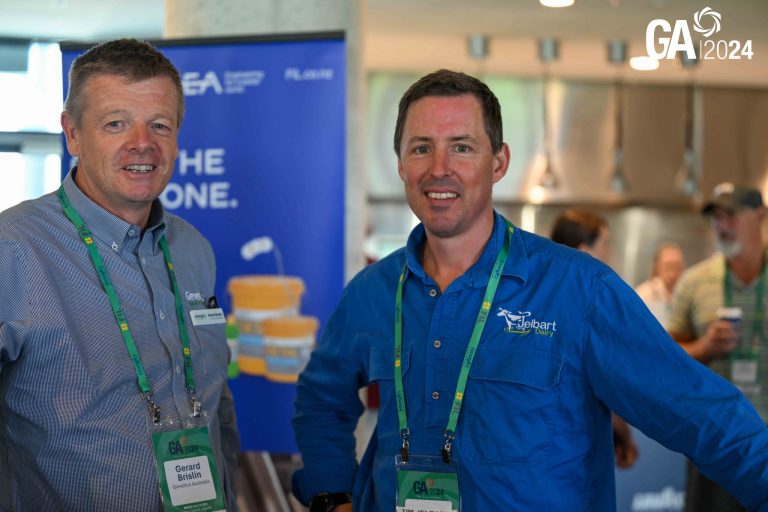
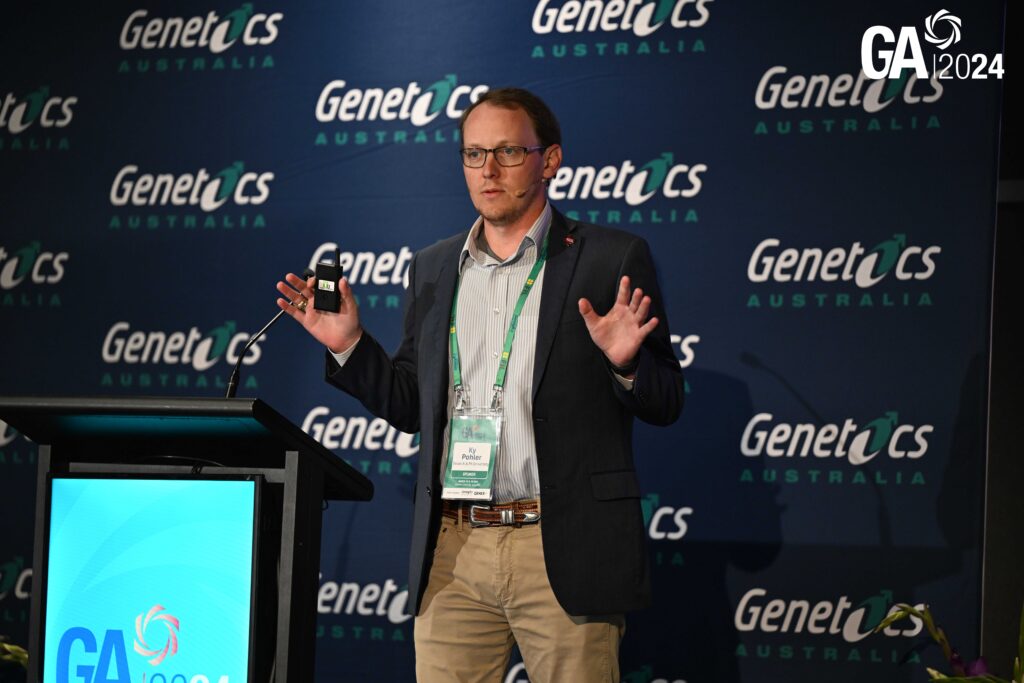
Ky Pohler presenting at GA 2024 Conference

Managing estrus intensity is a vital tool in reducing pregnancy loss and the Estrotect patch can help farmers to make the right choices. Associate Professor Dr Ky Pohler from Texas A&M University told the GA 2024 conference that assisted reproductive tools increase genetic gains. “Reproductive technology has been key in changing the way agriculture works around the world,” he said.

Ky highlighted the importance of estrus intensity in not only getting cows pregnant but in maintaining those pregnancies. “We should be proud of the pregnancy rates we have. We need to concentrate on maintaining the pregnancies we have, rather than solely thinking about how we get more pregnancies,” he said.

The modern US cow has about 30 per cent loss in the first 28 days of gestation and 12-14 per cent loss from day 28 to day 60. In beef, there is a loss of about 7-9 per cent of pregnancies from day 30 to day 100 of gestation.

These losses are a huge focus of research at Texas A&M University. “Pregnancy loss is a major issue on farms but it’s not like overnight our cattle started to lose more pregnancies; we’re just doing a better job of detecting it,” Ky said. “We have decent fertility, but it makes sense to look at how we can better maintain those pregnancies. A cow losing pregnancies from day 30-60 costs more than a cow that never got pregnant.”

The Estrotect patch has been developed to better manage pregnancy loss, with a new breeding bullseye black dot in the middle used to score estrus levels of cows. Cows with higher scores have higher pregnancy rates and lower pregnancy loss.

“As estrus intensity increases, you have increased fertility and also decreased pregnancy loss,” Ky said. “With lower estrus levels cows still get pregnant, but have 12 per cent pregnancy loss compared to 4 per cent among those with high estrus levels.”

The new Estrotect patch is making management decisions easier behind the cow, with the patch being used to target sexed semen into higher performing cows.“As we increase estrus intensity, we increase the protein level which leads to a better pregnancy rate and less pregnancy loss,” Ky said.

“By getting cows with more activated patches with black dots rubbed off, you not only get an increase in fertility, you get an increase in maintaining that pregnancy to day 60 of gestation. That means a high probability to get to calving.” He added that new technologies should be kept simple to use so farmers can make the right clinical care decisions.

Read PDF Version of Article

WE’RE HIRING: Beef Sales Consultant

Are you passionate about the future of beef production and ready to combine your commercial drive with technical expertise? Join Genetics Australia and play a pivotal role in helping producers improve herd performance, profitability, and long-term sustainability. Apply now! Drive beef sales growth across Queensland & Northern Australia Partner with producers to improve herd performance […]

Harnessing AI to Transform Agriculture

For farmers, AI has traditionally referred to artificial insemination but the new form of AI – artificial intelligence – has the potential to transform agriculture. Co-founder of Audacious Agriculture Stuart Austin says AI could be a game changer for farmers who will have easier and quicker access to data and new imaging opportunities. Mr Austin […]

GA 2026 Conference: South Gippsland Farmer Continues Mentorship Journey

Kate Kirk admits she was a total novice when she was introduced to dairy farming. At the time, Kate was working in a Leongatha supermarket in South Gippsland. Her then boyfriend, share farmer Jason Kirk whose family had two farms at Loch, needed to find a new worker when his sister moved on to run […]

Genetics Australia Beef Forum, GA Beef Forum 2022

Genetics Australia Beef Forum 2026: Angus Genetics in Northern Australia

Research into how Angus cattle are being better prepared to cope with northern Australian conditions will be presented at a forum in Emerald next month. Angus Australia extension officer Brad Hine will deliver a research, development and extension update on Angus in the North at Genetics Australia’s beef forum at Emerald, Queensland on March 11. Dr […]

GA 2026: Conference To Focus On Cattle Breeding Innovation

A conference in Geelong next month will show Australian cattle breeders how new technologies and innovations can shape the future of their herds and businesses. The GA 2026 Today, Tomorrow and Beyond conference hosted by Genetics Australia on March 17-18 will feature local and international speakers, farmers and dairy and beef industry leaders. The conference […]

Backing a vital system

In taking on national responsibility for the Genex HerdMonitor in Australia, Jon Down knows he’s backing a good thing. “I want to be part of a product that makes a difference for farmers,” he says. “It’s a struggle to get good staff and technology is filling that gap, and on top of that, staff want […]

New bull honours Greg Tiller

Gippsland farmer Daryl Hoey has had numerous bulls into the AI system, but his latest addition is something special. GT, which is joining the Genetics Australia Jersey portfolio this spring, has been named in honour of Daryl’s great mate, Greg Tiller. While it’s a bittersweet moment, it also gives Daryl great pride to recognise the […]

Genetics Australia re-accredited for China exports 

Australian semen and embryos will soon be exported to China for the first time in more than four years in a major coup for the local industry.  Genetics Australia (GA), including subsidiary Total Livestock Genetics (TLG), has been granted official re-accreditation to export both bovine semen and embryos to China, re-opening a potentially huge market […]

Media Release: Trans Ova Launching in Australia

Camperdown VIC, Australia – On July 1, 2025, Trans Ova Genetics, the global leader in bovine reproductive technologies, will officially launch in Australia in conjunction with Total Livestock Genetics (TLG) in Camperdown, Victoria, Australia, marking a major step in global livestock reproduction innovation. For the first time, Australian cattle producers will benefit from the advanced […]

Introducing Cathy Cole  

Sales Representative – Gippsland, Genetics Australia  We are pleased to announce that Cathy Cole has joined the Genetics Australia team in the role of Sales Representative for Gippsland, bringing over three decades of experience across dairy reproduction, animal health, and agribusiness.  In her role with Genetics Australia, Cathy’s focus is on building strong relationships with […]