



Genetics Australia Theme
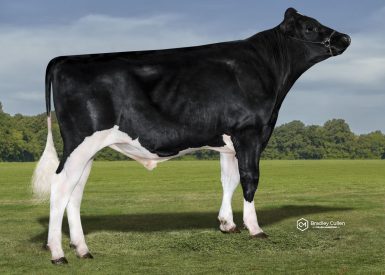
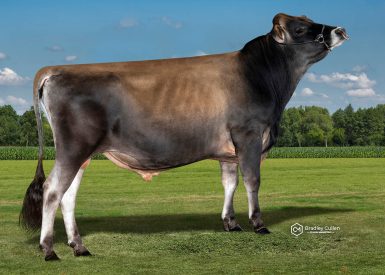
Genetics Australia continues to offer Australian dairy farmers superior genetics from around the globe through their strong and enduring partnerships the world”s best semen suppliers. From daughter proven sires to gTPI leaders, fertility specialists to the world”s best polled sires, you will find them all in our line-up following the August 2020 proof release.
Feature Sires:
MONTANA (Montross x Uno)
A bull that needs no introduction to the Australian market, his daughters continue to impress.
- Black, A22 and moderate size and stature. MONTANA has delivered correct rumps and is proven to add teat length.
- Highly fertile daughters at +2.1 on DPR
- Available in both sexed 2.1 & 4M as well as conventional to create the next generation of great Australian cows
SAMURI (Spring x Supersire)
Now with over 2,000 daughters milking daughters in the U.S post the August summary.
- This A22 sire, now with a 2700 TPI, has also improved his breeding values for Type & Udder composites.
- Possibly no better bull in the market that offers elite daughter proven TPI and amazing conception rate with an SCR of +2.7.
- Positive Health and Fitness traits and with an economic index of $561 Net Merit dollars.
HOUSE (Hang-Time x Jacey)
- Early daughters now calving in the U.S,
- HOUSE offers a diverse pedigree and a bull that has again improved his position and now can be found over +2700 TPI points.
- His nice balance between Production and Type combines with +1.9 DPR with excellent wellness traits.
- Breeding daughters of moderate size and stature, adequate dairy strength and outstanding udders is what we can expect with this outcross sire.
JSYOLO (Bandares x Meridian)
- Solid ratings for the key indexes in August with +2686 TPI and $555 Net Merit.
- Over +2.00 on udder composite with impressive ratings for udder attachments and udder depth.
- JSYOLO is also one of the best A22 sires on the market when it comes to settling cows with a strong 3.0 SCR score.
MOLINE (Positive x Medley)
- Moline is the #1 $NM & #2 GTPI offering from our friends at Jetstream Genetics.
- He combines +1330 pounds of milk with 167 combined pounds of solids with positive deviations.
- Positive calving ease at 2.1%, moderate stature and capacity throughout with well attached, high wide udders.
- MOLINE is A22 and is readily available for your spring joining program.
MAINSTAGE (Timberlake x Jedi)
- MAINSTAGE offers high milk flow, high components, positive DPR and strong calving ease.
- Offers a neat linear that will deliver moderate statured cows with high, wide well attached udders.
- MAINSTAGE will also offer slope to rump and spring of rib to give you capacious modern cows.
KONRAD (Hotjob x Jedi)
- KONRAD is a moderate milk flow sire with +111 pounds of combined solids with positive deviations.
- Positive DPR and a calving ease rating of 2%.
- KONRAD is an outstanding Type option at 2.20 PTAT and 2.33 UDC. Outstanding production from amazing udders.
SANJAY (Hotjob x Frazzled)
- +1612 pounds of milk with +127 pounds of combined solids and high, wide & well attached udders.
- This young black coated sire has a calving ease rating of 2%
- SANJAY will produce moderate statured cows with width and capacity throughout.
HOWDY (Legacy x Modesty)
- New elite TPI and Net Merit sire @ 2842 gTPI and 757 Net Merit.
- Moderate frames and stature with quality udders make Howdy the modern type.
- This A22 sire with an Udder Composite of 1.60 will have widespread appeal.
A2P2 (Luster x Duke)
- Canada”s number 1 PP genomic sire
- A22 with over 2 points PTAT.
- Superior type proof with not a single negative trait in his proof.
NIPIT (Hotspot x Splendid)
- One of the highest demand PP sires in the world
- Half brother to the popular Vogue CFP.
- Like A2P2 – not a single negative trait in his proof.
- A22 and PP with Sexed semen available.
In brief:
- SOUND SYSTEM has maintained his proof and is number 1 in Italy, number 1 in Canada and number 23 TPI in the USA. First semen due this month.
- SECRETARIAT has also strengthened his proof as he continues to impress with over 1,300 daughters now in milk!
- Last call on BRADNICK for the 2020 spring breeding season. We encourage those looking to continue with this Legendary sire to order ASAP to avoid disappointment.
- DEWARS – last stocks available. Now daughter proven.
- SOGNO is an elite Italian PP Red young sire. Super udders, daughter fertility and calving ease.
The highly regarded daughter proven sire Emu Banks CHRISTMAS was recently euthanised on welfare grounds. Bred by Bryan and Jo Dickson of Terang, CHRISTMAS has built a solid reputation as a premier transmitter of production and strength.
‘CHRISTMAS was the right bull at the right time’ explains Breeding and Genetics Manager, Peter Thurn. ‘At a time when we have so many bulls with negative ratings for strength trait, CHRISTMAS was there to provide the balance many breeders were looking for’. Body Depth, Muzzle Width and Chest width ratings for CHRISTMAS are superior to the majority of bulls available today.
His production rating is unchallenged with over 3000 daughters contributing to his ratings of 24kgs of protein, 41 kgs of fat with positive milk flow and deviations. His dam, Barkly Gold Christy VG89 was the source of many of the desirable characteristics transmitted by her son. She was purchased at the Barkly Holsteins dispersal and was one of the highest ABV cows in that herd. Unfortunately, Christy only had 2 daughters at Emu Banks so her direct maternal influence in the Emu Banks herd has been limited, with the exception of her son CHRISTMAS.
From all at Genetics Australia, well done to the Dickson family for breeding
such a unique and influential bull.
CHRISTMAS is still available in both conventional and sexed semen.
Health and animal welfare traits will underpin the ‘2030’ green cow, according to the Genetics Australia chief executive Anthony Shelly.
With a focus on breeding for these traits, as well as decreasing a cow”s environmental ‘foot-print’ providing the key the livestock industry”s future.
‘The community will grant us a social licence with a particular focus on animal welfare and we will need to demonstrate our commitment to these issues,’ Mr Shelly told the 2020 Genetics Australia Online Conference.
‘We can be naive to these facts, but the reality is our social license is in our hands and we need to put in place appropriate tools, and application of tools, to allow us to the be granted that social license.’
Wrapping-up the inaugural online conference, Mr Shelly emphasized the importance of breeding traits developed in Australia such as heat tolerance, feed efficiency and mastitis resistance.
He said using these tools as part of future breeding programs would demonstrate the dairy industry”s commitment to its social license.
Mr Shelly thanked all the speakers who provided insight on everything from the Australian dairy market, to the future of sexed semen, fixed time artificial breeding, fertility challenges and new breeding traits.
Looking toward the future, Mr Shelly predicted genomic sire usage would increase – following the global trend – while proven semen usage would decline.
The performance gap between proven and genomic sires will increase, he said.
He anticipated an increase in sexed semen usage, a rise in the tailored mating programs, combining reproduction history and breeding value information, while mating strategies using genomic information would be ‘normal’.
Mr Shelly said Genetics Australia was proud of its 53-year history but acknowledged there was still room for improvement in the herd improvement industry to strengthen it for the future.
‘I strongly believe some of those solutions will be looking towards the future and identifying more of what will be required,’ he said.
‘The application of the breeding and breeding traits that are going to allow us to still be regarded as that clean, green Australian industry and one where our partners and suppliers from around the world want to be a part of as well.’
More than 300 people from right across the globe registered for the seven-week series, with 70-80 tuning-in weekly. Kongwak dairy farmer, Brian Anderson tuned in for the online conference and found it very useful.
‘The calibre of international speakers has been exceptional, the topics have been fantastic and very informative, some of the data shows what extreme lengths the International companies in our industry will go to so they can discover new technology and craft the future,’ he said.
‘There have been many small tips throughout this series that have given us an insight into the one percenters in our industry that really give our business an edge and help build profitability.’
Mr Anderson urged dairy farmers and industry personnel to visit the Genetics Australia YouTube channel to watch the series, saying it”s a great resource that identifies with what”s trending in relation to genetic progression and farm profitability.
Dairy cows could be genetically selected to produce ‘niche’ milk to improve human health, including a component that provides some benefits of human breast milk.
And this technology could deliver the dairy industry a ‘step-change’ in terms of what it could produce with infant formula.
Agriculture Victoria principal research scientist Professor Jennie Pryce said there was ‘great science’ behind the opportunity to breed cows to produce human milk oligosaccharides.
‘They are the same as you would find in the milk of human breast milk and give children or babies protection against pathogenic infections,’ she said.
‘They also promote development of the intestine and help the gut microbiome to get going, obviously that”s one of the reasons by breast milk is promoted.’
Professor Pryce provided this insight as part of a presentation about breeding the ‘socially acceptable cow’ at the 2020 Genetics Australia online conference.
She said a genetic marker explained about 80 per cent of the genetic variation in the oligosaccharide which meant it would be simple to ‘aggressively’ select for these niche milks.
Breeding a socially acceptable cow should also consider the cow”s impact on the environment, its welfare and sustainability, according to Professor Pryce.
Sharing preliminary research data, Professor Pryce showed how selecting for bulls with both a high Balanced Performance Index (BPI) and lower methane emissions was possible without too much compromise in profitability.
Professor Pryce plotted the BPI – the dairy industry herd improvement organisation DataGene”s economic index – against a greenhouse gas index.
It showed if a dairy farmer only selected high BPI bulls with the most favourable greenhouse gas emissions, they would compromise their BPI by about 20 units. This is down from a mean of 333 BPI if they selected the top 30 BPI bulls without a consideration of emissions.
‘It doesn”t seem like a huge comprise to be able to get that advance in terms of reduced emissions,’ she said.
Professor Pryce also highlighted how Australia led the world with research on heat tolerance and feed saved – both traits with contributed to a socially acceptable cow.
The former Australian Breeding Value enables cows to better handle warming temperatures, the latter ABV increasing their feed to milk efficiency.
Professor Pryce said a lot of what the dairy industry was already doing was ‘hugely progressive’.
‘Consumers need to know that we are already breeding for more environmentally friendly, resource efficient cows,’ she said.
‘If we focus on profit, welfare and social acceptability we will be more successful in the long term.’
Next week: Genetics Australia CEO Anthony Shelly discussing the next decade”s breeding challenges.
A fixed time insemination program is the most cost-effective way to achieve more artificial pregnancies if the semen isn”t too expensive.
But for those wanting to get the most out of the reproductive technology, following some quality assurance protocols can help limit pregnancy rate losses.
Vetoquinol Australia and New Zealand business unit manager Dr Sophia Edwards gave practical tips to dairy and beef producers about using fixed time AI as part of the 2020 Genetics Australia online conference.
Dr Edwards said fixed time AI was actually ‘quite simple’ and ensuring optimal results was about planning and management at each step of the process.
‘There”s pre- mating management, you might be considering vaccinations for reproduction loss, and nutrition – certainly ensuring animals are on a rising plane of nutrition and have a good body condition score,’ she said.
‘Then there is the synchronisation treatments, making sure you have the correct protocol, you are giving the right doses according to your herd. There”s the element of semen quality, the collection and management of that semen and there”s the insemination itself. Ensuring you have a technician that is experienced and doing a good job and… post-mating management, ensuring again, that the nutrition is managed forward and ensuring the health of those females.’
Using Angus Sire Benchmarking data out of South America, Dr Edwards showed how fixed time AI not only ensured more calves were born earlier in the season, these calves would also be up to 38kg heavier at weaning.
She said those born via the fixed time AI program were 205 days old at weaning, 19 to 24 days older than naturally sired calves. ”In a beef situation earlier calves are heavier, and more weight equals more dollars,’ she said.
This study also demonstrated there were 8 per cent more pregnancies for those animals exposed to fixed time AI, than other ways of joining. This was because early synchronisation offered cows opportunities for return heats and the program also helped remedy the non-cycling animals.
In a 450-cow dairy herd in northern Victoria, the average calving date was 12 days earlier thanks to fixed time AI.
Twenty days into the calving season, assuming all cows have the same gestation, this represents a 121 per cent increase in production at the start of the season, Dr Edwards said. At the end of the season this translated to 19.8 per cent more milk.
Looking at the future of reproduction technologies, Dr Edwards explained the concept of surrogate sires- where one bull ejects the sperm cells of a higher genetic merit animal. She said this could be used to introduce new genetics into herds via tropically adapted bulls.
Dr Edwards also predicted a rise in the use of ‘big data’ in the breeding industry, the technologies of genomics and assisted reproduction merging and animal ‘wearable’ technologies would become common management.
Establishing the level of estrus activity at joining could help lift fertility and – most importantly – decrease the rate of pregnancy loss.
Texas A&M University Department of Animal Science assistant professor Ky Pohler told the 2020 Genetics Australia online conference that late embryonic or early fetal loss – about day 45 to 60 – was extremely costly for beef and dairy producers.
‘The cows go a lot of days with us believing they are pregnant…and then we have to revert all the way back to the beginning to restart the process,’ he said.
Using data from dairy cows which received a single artificial insemination in a fixed time joining program, Dr Pohler showed how most of the time fertilisation was not the main limiting factor in embryonic loss in a lactating dairy cow – rather it was the time post fertilisation.
At day 28 – when a pregnancy can be first detected via ultrasound – there was a 30 per cent loss, according to Dr Pohler. These animals ‘recycle’ back and are bred at the next estrus.
Those with a detected pregnancy at day 28, up to 12 per cent go onto loose this pregnancy – characterised as late embryonic loss – in the coming weeks.
From day 45-60 it is ‘pretty safe’ to maintain the pregnancy going forward.
Dr Pohler said similar results were evident in beef cattle.
Embryonic losses where reduced when cows and heifers were joined when they had a stronger estrus.
The strength of the estrus – or heat – was determined by the amount of scratching on an Estrotect breeding indicator patch attached to the animals.
Those which had 50 per cent or more of the patch surface area scratched, had increased pregnancy rates at day 30, Dr Pohler said.
The pregnancy loss in the cows with less than 50 per cent of the surface area scratched- defined as no or low estrus – was higher.
Dr Pohler advised farmers to breed cows with the no or low estrus to conventional semen – rather than more expensive sexed semen – or beef semen to limit losses and acknowledged more work was needed in this area.
Up to 4 million less dairy semen straws were sold into the US market last year as producers embrace ‘beef-on-dairy’, according to a leading technology manufacturer.
This comes as new research showing ‘basically identical’ conception rates between the new sexed semen product and conventional semen was unveiled to the 2020 Genetics Australian online conference audience last night.
Sexing Technologies CEO Juan Moreno – live from Texas in the US – explained how improvements to the way sex semen was produced delivered fertility gains and reduced the cost of the product.
Revealing world-first data, Juan said a trial involving 14,000 sexed semen and 30,000 conventional inseminations across more than 80 herds – including both synchronised and natural mating”s- had statistically proven the improvements farmers had witnessed thanks to the new technology.
Last year about 19. 2 million straws of dairy semen were sold in the US market, down 4 million straws from 2017 – the first-year sales of sexed semen started to surge.
‘Producers are using genomics to identify their best females, their best females are being artificially inseminated with sexed female semen out of the best bulls and that”s what is creating the next generation of replacements and the rest of the herd is being bred to beef bulls,’ Juan said.
‘(That”s created) a new product called beef-on-dairy and it is showing to be a very high-quality product, that is starting to bring a premium. A lot of producers that are now feeding beef-on-dairy genetics on the feedlots are getting the same price and, in some cases, a higher price than producers are getting for a straight beef animal. Why? Because a dairy animal crossbred with a beef bull has a tremendous amount of uniformity. Imagine this, I”m a large dairy and produce 100 beef calves out of dairy cows. All those 100 beef calves are going to be out of one bull, that is called uniformity and the beef chain likes uniformity.’
Juan urged conference attendees to contemplate a future where the dairy industry would need to produce more milk and beef without increasing the amount of arable land or natural resources consumed.
He said technology was the answer to increasing agricultural efficiencies to feed a growing global population, pointing specifically to a growing trend of breeding for improved feed conversion efficiency.
Next week: Dr Ky Pohler, Texas A&M University assistant professor will speak about improving fertility.
Gene editing and genomics are breeding tools that will help the dairy industry adapt and thrive.
That”s according to World Wide Sires and Select Sires director of global training Joel Mergler.
Mr Mergler challenged dairy farmers and the wider industry to stay relevant, even shedding old ideas and practices, to ensure dairy farming can adjust to future challenges.
‘Genomics is the biggest change that can keep our industry relevant,’ he said. ‘It opened the book for us to be able to see inside (an) animal and change that population in a very short time.’
Using polled genetics as an example, he said if the dairy industry were no longer permitted to remove horns from animals, the technology of DNA testing – genomics – could introduce polled genes fast.
Speaking from the United States of America as part of the 2020 Genetics Australia online conference, Mr Mergler said dairy faced challenges such as climate change, larger farms, increased efficiency and animal activist threats.
Maintaining ‘relevance’ as an industry could mean breeding animals which neutralize some of these potential concerns.
He told the conference, breeding selection for feed efficiency, longevity, and environmental issues such as nitrate, phosphate and methane output would be included in future genetic selection.
‘There”s a huge opportunity and we need to dig into and understand more about epigenetics – where genes get turned on and turned off,’ he said. ‘We will have to continue to learn and understand how genes are really working. We are really just scratching the surface now.’
Gene editing could be a ‘tremendous tool’ from bringing the slich gene into the Holstein cow to improve heat tolerance, Mr Mergler explained.
‘But a lot of this isn”t going to be the technology holding us back, as much as the consumer perspective,’ he said. ‘A lot of these things we won”t know until we get into the future to know whether these tools are going to be available for us.’
Next week, the conference will hear about the future of Sexed Semen with Sexing Technologies CEO Juan Moreno.
Mail-order ice cream and dairy protein made in a science laboratory are threats facing the future of the Australian dairy industry.
And this lab-produced dairy could compete with bovine milk products on cost- with production of dairy proteins in a petri dish estimated to cost just 3c/litre.
Dairy Australia industry insights and analysis manager John Droppert told the first session of the 2020 Genetics Australia online conference that the competition plaguing dairy in 2030 won”t necessarily be what it is now – plant-based milks and production from other countries – instead, he said it could be more ‘left field’.
‘What will happen if somebody can produce our product for a fraction of the cost and risk?’ he said.
Cheaper products, produced ‘ethically’ and offering ‘something different’ will be what consumers in the year 2030 will demand from the dairy industry.
Mr Droppert said these consumer trends were already evident. For example, the popularity of housebrand $1 a litre milk and the pressure on the beef industry to reduce its hormone use or pork producers to use sow stalls, even if the practice increases costs for the primary producer and they can”t be recouped from the market.
Underlying future consumer trends – what”s driving shoppers – will be a battle between food production fact versus fiction, according to Mr Droppert.
‘For us, of course as an industry, facts are important and I think for the dairy industry that facts are on our side,’ he said. ‘We have a nutritious product and it is good for you. But you could run an ad saying all those things, you can ram-it-down someone”s throat, but if their friend Karen on the internet says “milk is full of puss” it is these kinds of things that keep getting traction, despite the facts.’
Butter sales prove facts can win, according to Mr Droppert with its ‘naturalness’ winning consumers across from its rival margarine.
Genetics Australia and Vetoquinol Australia are pleased to announce they have formed a partnership aimed at delivering world class products and solutions to enhance artificial insemination programs.
Genetics Australia CEO Anthony Shelly said ‘We are proud to have industry leaders in reproduction and synchrony programs Vetoquinol as a partner. The partnership not only allows Genetics Australia to market Vetoquinol”s leading Cue-Mate® brand, but it provides Genetics Australia staff and customers access to the wealth of bovine reproductive knowledge and research conducted by Vetoquinol not only here in Australia, but around the world.
‘Brands such as Cue-Mate® go hand in hand with Genetics Australia”s core business of supplying high quality conventional and sexed dairy and beef semen to farmers across the country’.
Shelly said, ‘Our business involves more than just the transaction of selling a semen straw. If we can provide the right tools and knowledge, we enable our customers to maximise the potential of that straw of semen.
‘Through our ability to supply high quality semen and add brands such as Cue-Mate®, combined with industry leading assisted reproductive advice, we believe customers will benefit significantly not only with more females falling pregnant on day one of their breeding cycle but also with the overall improvement in herd profitability and productivity’.
The partnership will initially be based on improving assisted reproductive success rates with conventional semen and frozen sexed and fresh sexed semen in conjunction with Vetoquinol”s leading progesterone brand, Cue-Mate®.
Genetics Australia customers will benefit from the various synchronisation protocols and advice tailored to individual customer requirements, developed by the Vetoquinol Repro 360 team.
It is envisaged the relationship between Genetics Australia and Vetoqiunol Australia will be the foundation for a long-term partnership that will strengthen the vision and level of collaboration across Australia”s Beef and Dairy industries.
*Cue-Mate® is a registered trademark of Vetoquinol.
Repro360 website to find out more:https://www.repro360.com.au/or contact Dr Sophia Edwards,VetoquinolFPA Business Unit Manager:[email protected]