




Genetics Australia Theme
Dear members,
Today we received the excellent news that our Joint Venture (JV) with URUS has been formally approved.
Confirmation from the Registrar of Co-operatives that our special resolution for the JV has been formally accepted means that we are new full steam ahead in planning for a July 1 start.
The new JV entity that will be formally known as Genetics Australia Holdings Pty Ltd but will continue to trade simply as Genetics Australia.
What does this mean for you?
In the short term, you will not notice any major changes. You will be dealing with the same people and using the same products.
However, in the long-term we envisage that that JV will lead to many benefits and access to an expanded range of products and services, including the full suite of GENEX products and access to the PEAK breeding program. This is great news for our members and the Australian industry.
The TLG brand will also remain prominent for both our services and with the TLG semen portfolio.
Thanks for your support
The JV received overwhelming support from members with 94 per cent of votes being in favour of the ‘Special Resolution’. We thank every member that took the time to consider this proposal and all those who had the confidence to back the board’s vision for the future.
What’s next?
We’re working hard as a team to make sure there will be a smooth and exciting transition to the new entity from July 1.
There’s a lot to do but we’re confident we can make it happen by July 1 and create a brighter and exciting future for our co-operative and all our members.
Genetics Australia Holdings Pty Ltd’s Australian Company Number will be 666 904 436 and Australian Business Number (ABN) 96 666 904 436.
Kind Regards,

Trevor Henry
Chairman

Anthony Shelly
CEO
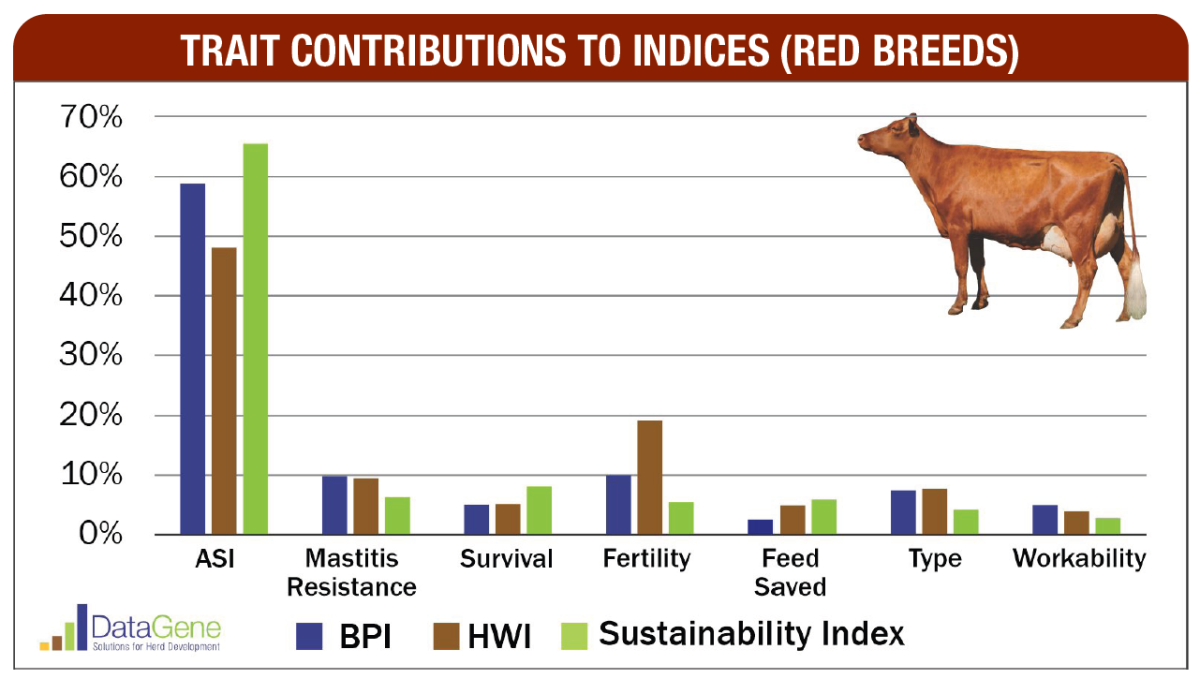
Introduced in August 2022, the Sustainability Index (S.I) is a breeding tool to help dairy farmers fast track genetic gain for reduced emissions intensity. This indices places a greater emphasis on the traits that contribute to reducing emissions intensity (production, survival and feed saved). Breeding decisions will complement a range of on-farm management practices to reduce emissions.
“We all have a responsibility in varied ways to work towards an improved environmental position‚ Breeding a sustainable cow for tomorrow will not limit your profitability today or into the future whilst doing our part to look after the environment. Genetics Australia can assist you and your needs inbreeding the Australian cow that is compliant and “Future-Ready”
– Greg Tiller, Territory Manager Northern Victoria.
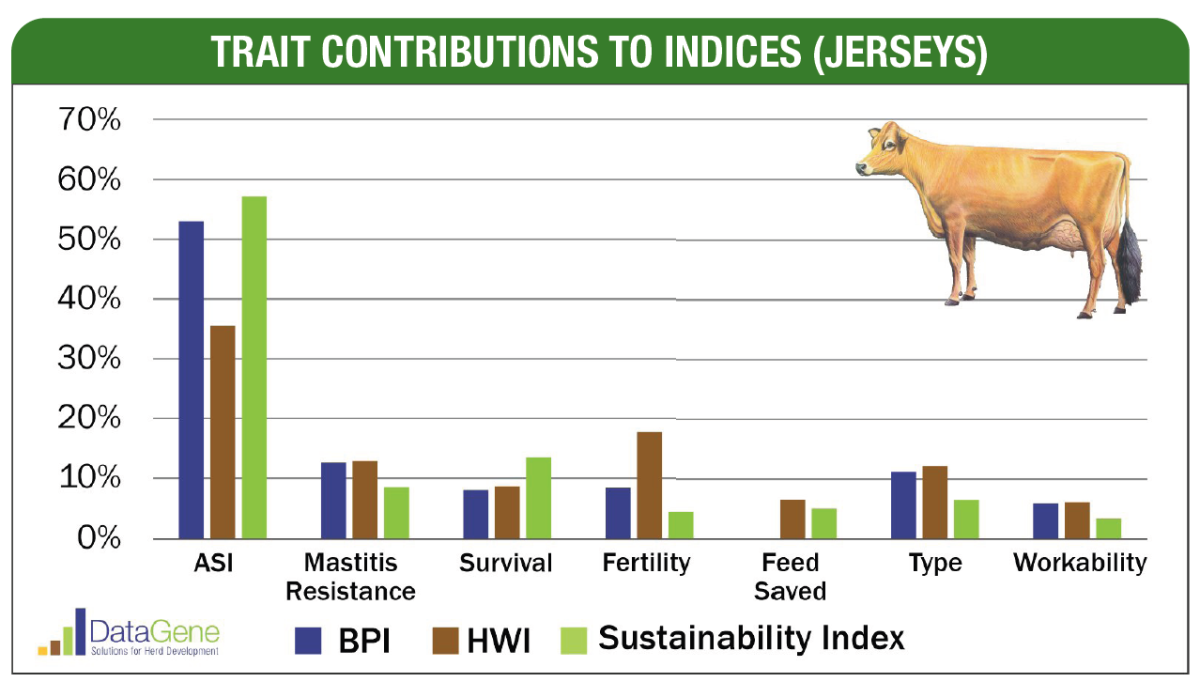
The Sustainability Index is a relative ranking of animals expressed as a unit against a base of 0. The higher the Sustainability Index number, the more efficient the animal for emissions intensity.The unit of emissions intensity used in the Sustainability Index is kilograms of carbon dioxide equivalent per kilogram of protein equivalent produced (kg CO2-eq/ kg protein-eq). The Index is a desired gains index and cannot be directly compared to the BPI or HWI.
Trait Contributions to Indices
“On closer inspection you will find the Sustainability Index (S.I) is strongly correlated to the BPI index with some minor differences and re-rankings between bulls for BPI and S.I. Traits such as milk production (in the form of protein), Survival, Feed Saved are all traits that have been researched and demonstrate greater genetic gains towards a more sustainable cow for the future.”
– Gerard Brislin, Territory Manager Tasmania.

The Index is one of many tools dairy farmers can use to achieve the industry commitment of a 30 per cent reduction in the intensity of greenhouse gas emissions on-farm by 2030.
Genetic Australia’s Top SI Ranked Bulls
The Sustainability Index ranks bulls according to their ability to reduce greenhouse gas emissions and increase milk production while also considering other vital profitability traits.
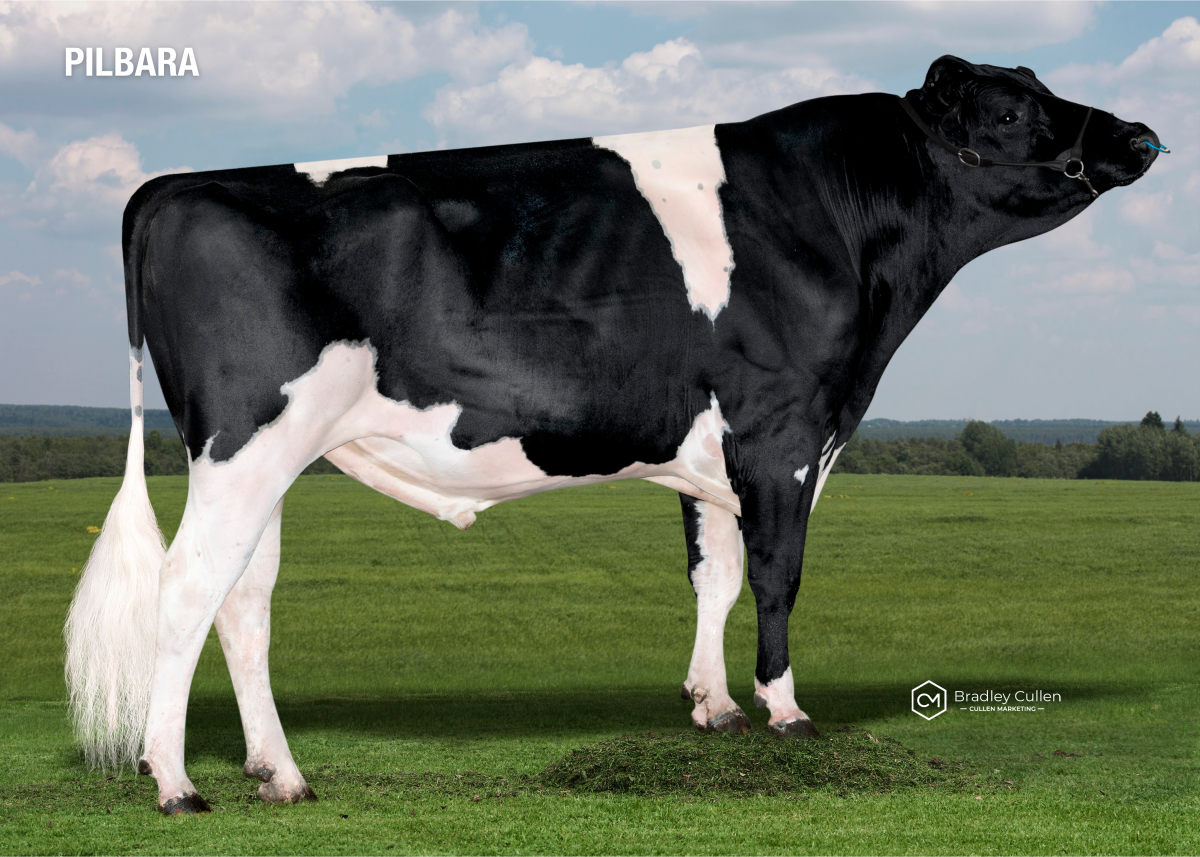
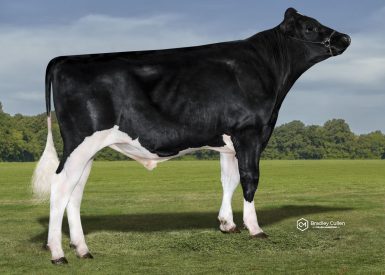
Genetics Australia is pleased to present our team leader PILBARA, the #1 ranked Holstein sire on the Sustainability Index. He is an impressive high BPI bull, at $567 BPI. He excels for BPI, HWI, ASI (Production) and SI.
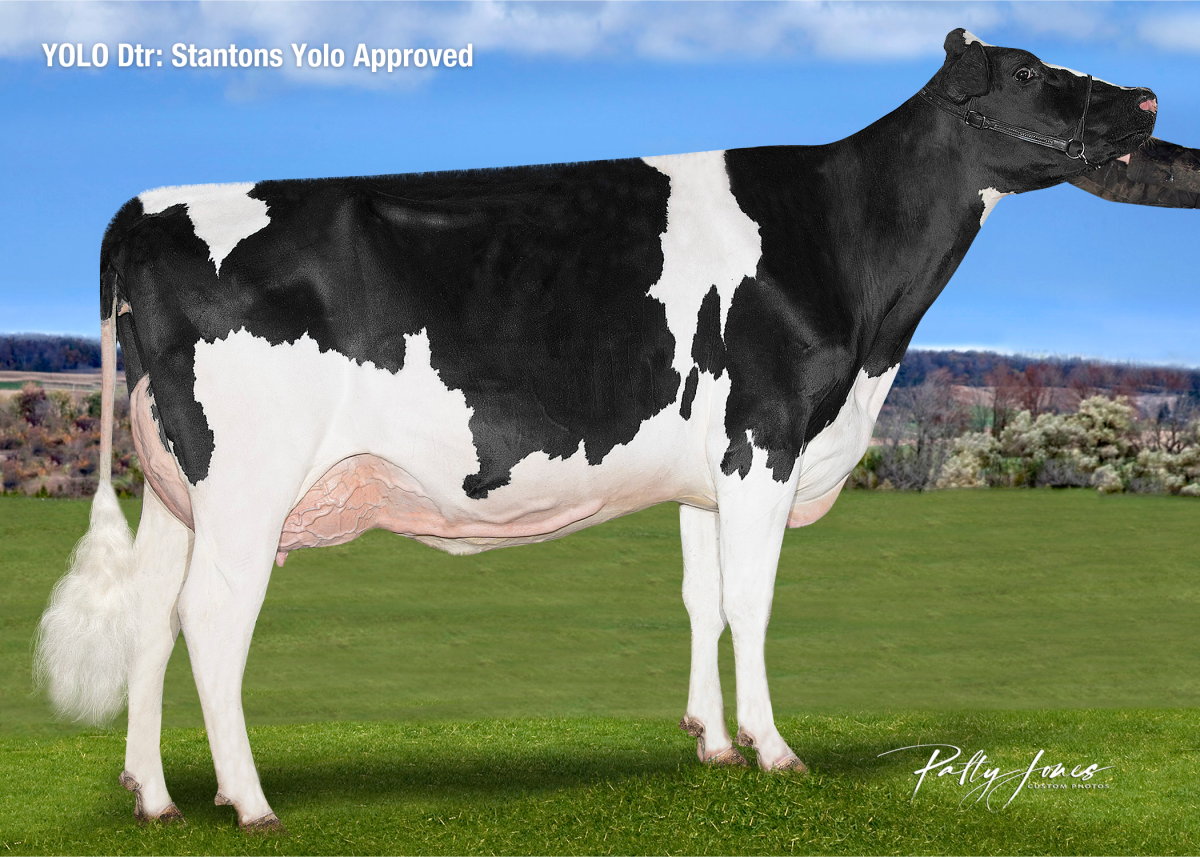
YOLO is another impressive Sustainability Index bull sitting at 1,037, he sits in the top 1% for breed for BPI, HWI and SI. He is a high production bull with outstanding conformation sourced from Jetstream Genetics USA. (Only available in Sexed 4ML).
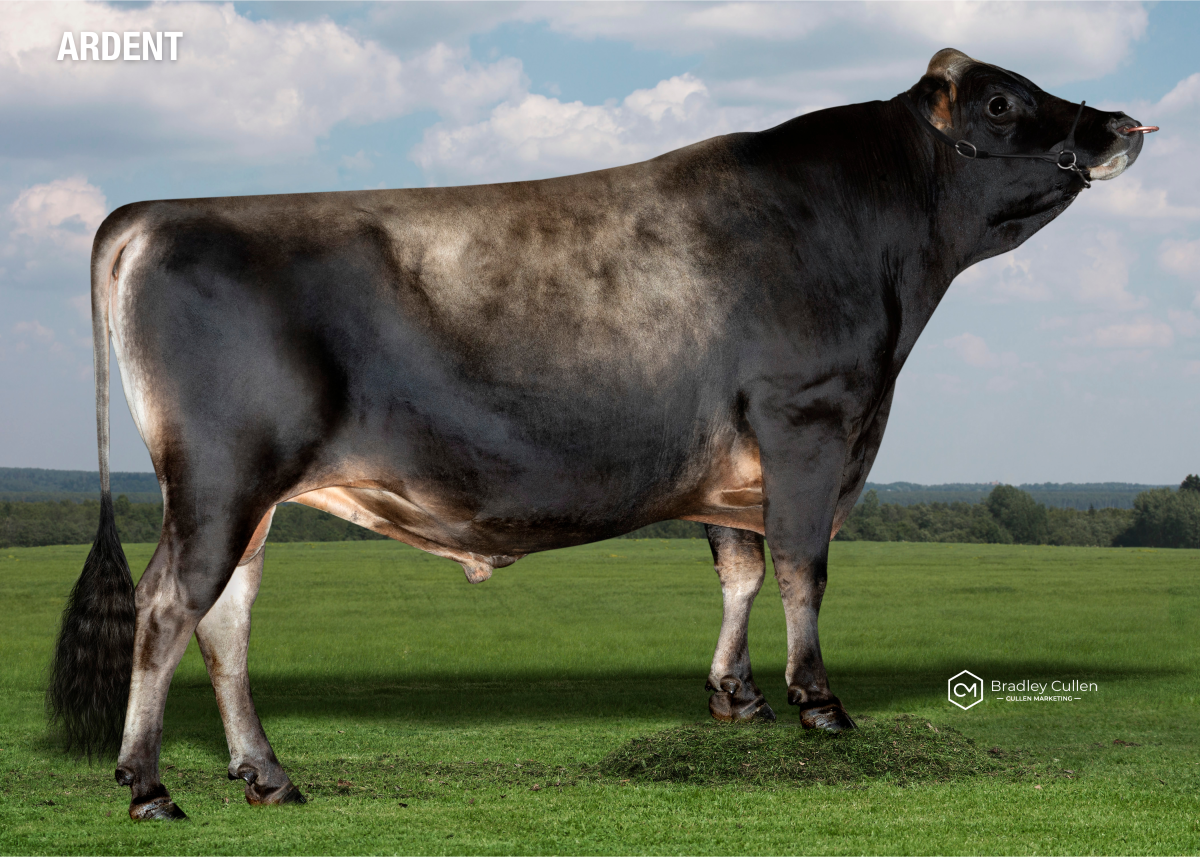
Talk to one of our sales representatives today about how the Sustainability Index can be used to improve your herd.
Datagene Sustainability Index Factsheet
Genetics Australia will enter into a new joint venture with global herd improvement leader URUS in a move that will bring huge benefits for GA users.
Subject to approval from GA members, the joint venture (JV) is due to start on July 1, 2023 and will usher in an exciting new era in Australian herd improvement.
GA members now have the opportunity to have their say on the proposal and Chairman Trevor Henry says the Board unanimously recommends a ‘yes’ vote.
‘Genetics Australia has a strong position in the Australian market, but the market is becoming increasingly impacted by global trends that we have limited resources to pursue,’ Trevor said ‘Partnering with one of the large multinational market participants is key to establishing Genetics Australia as a long-term sustainable supporter to Australian farmers.
‘The Board sees this joint venture as an extremely exciting opportunity for the Genetics Australia business to strengthen its position as the pre-eminent provider of genetic products and services to the Australian dairy and beef sectors, whilst at the same time providing great opportunities for the most critical components of our business our members and our staff.
URUS is based in the United States and is a global leader in products and services for dairy and beef artificial insemination genetics, reproduction, and farm management systems, servicing more than 80 countries with brands such as GENEX, ALTA Genetics, PEAK, and Trans Ova amongst many others.
‘Combining with URUS will provide Australian dairy and beef producers with access to market leading global genetics, technology and advice that simply could not be achieved by GA on its own; and GA will now have access to global markets for its Australian bred and sourced bull lineup,’ Trevor said.
‘This will assist in marketing Australian genetics to a global audience.’
The new entity will continue to trade as Genetics Australia. It will be 60 per cent owned by URUS and 40 per cent owned by GA. URUS will have three directors, GA two.
The JV will be through URUSs co-operative subsidiary business GENEX. It will have access to the full suite of products and services from the GENEX and PEAK subsidiaries of URUS.
GA will continue to own the land the business operates on and lease it to the JV for a commercial return. The GA Co-Operative entity will hold 40 per cent of the issued shares in the new business as an asset on its balance sheet.
Current GA CEO Anthony Shelly will manage the JV and all current staff of GAC will have continuing roles. The GA and TLG brands will remain active in the Australian market.
Anthony says URUS is perfect fit as a ‘partner of choice’ with GA. ‘All of our negotiations with URUS have focused on how the JV partnership can deliver enhanced products and services to GA”s members and the broader market in Australia,’ he said.
Anthony said that users wont notice any major changes under the JV. ‘You will still be dealing with the same people and receiving the same services but in the months ahead you will see an increased depth of products and more opportunities.
‘There are strong similarities between GENEX and GA which we believe will be of great advantage for the new JV.’
URUS CEO Paul Hunt described the JV as a fantastic opportunity for both partners. ‘We firmly believe that this can have a significant positive impact for Australian farmers,’ he said.
The postal vote process has started and members are encouraged to vote by 2nd May 2023.
Dear Genetics Australia Co-Operative Shareholder Members,
It is with great excitement that this morning we announce the proposed formation of a joint venture (JV) with the URUS Group, a global leader in cattle genetics, and the Genetics Australia Co-Operative Limited (GAC).
The JV with URUS is being proposed for several key reasons, including:
- To ensure the long-term sustainability and financial viability of GAC;
- To enable our business to provide both our Members and the broader Dairy & Beef industries with world leading products, technologies and services;
- To provide our staff with the opportunity to grow and expand their knowledge in our industry; and
- To continue our focus of supporting genetic enhancement of the Australian Dairy and Beef herds.
In proposing this JV your Board has been focused on several key areas, namely:
- Ensuring the assets that the GAC has built up over many years are protected;
- Ensuring that the business is sustainable for the long term and can provide appropriate returns on the GAC”s asset base;
- Ensuring that the goodwill developed in the Genetics Australia brand remains;
- Ensuring that the business can continue to provide the highest quality of products and services to Members and Australian farmers along with providing access to Australian genetics for our international customers.
Your Board strongly recommends the proposed JV and encourages you to read both the attached document which provides some initial information and Q&A”s. The formal voting document has been sent in the mail and should arrive with you in the coming days, if this information has not arrived by the 15th of April, please contact [email protected]
Over the coming days we have arranged several Member meetings and information sessions where you will be able to meet with both GAC and URUS Group representatives who will be in Australia this week. We appreciate that this is short notice, however if you can attend any of these sessions we certainly encourage you to.
MEMBER MEETINGS – IN PERSON
COBDEN BOWLING CLUB – RSVP HERE
TUESDAY 4TH APRIL – 11.30AM
6 Rix Avenue, Cobden
LEONGATHA RSL – RSVP HERE
WEDNESDAY 5TH APRIL – 12.30PM
Corner Michael Pl & Smith St, Leongatha
CALEDONIAN HOTEL – ECHUCA – RSVP HERE
WEDNESDAY 5TH OF APRIL – 7.00PM
110 Hare St, Echuca
COMFORT INN & SUITES (FORMERLY QUALITY INN TRARALGON) – RSVP HERE
THURSDAY 6TH OF APRIL – 12.00PM
5601 Princes Highway Traralgon
MEMBER MEETINGS – ONLINE
TUESDAY 4TH APRIL – 9.00AM (AEST)
CLICK HERE FOR ZOOM LINK
WEDNESDAY 5TH APRIL – 3.00PM (AEST)
CLICK HERE FOR ZOOM LINK
FRIDAY 14TH APRIL – 3.00PM (AEST)
CLICK HERE FOR ZOOM LINK
If you have any questions at all, please don”t hesitate to contact [email protected] or indeed any of the Board or Senior Executive. We look forward to your support in this exciting new phase for our business.
Thanks & Regards
Trevor Henry Anthony Shelly
Chairman CEO
Member Letter and Q&A Document
Australia”s largest artificial breeding supplier, Genetics Australia, will enter into a new joint venture with global herd improvement leader URUS in a move that will create huge benefits for Australian farmers.
The joint venture (JV) is due to start on July 1, and the new entity will continue to trade as Genetics Australia.
URUS is based in the United States and is a global leader in products and services for dairy and beef producers for artificial insemination, genetics, reproduction, and farm management systems, servicing more than 80 countries with brands such as GENEX, Alta Genetics, PEAK, VAS and Trans Ova amongst many others.
The JV will be 60 per cent owned by URUS and 40 per cent owned by Genetics Australia (GA). It will have access to the full suite of GENEX products and access to the PEAK program.
Current GA CEO Anthony Shelly will manage the JV. The JV is subject to approval from GA members with a postal vote starting today. GA will hold meetings in coming weeks and provide other opportunities for members to ask questions and provide feedback.
Genetics Australia chairman Trevor Henry said the JV would usher in an exciting new era in Australian herd improvement. ‘Combining with URUS will provide Australian dairy and beef producers with access to market leading global genetics, technology and advice that simply could not be achieved by GA on its own; and GA will now have access to global markets for its Australian bred and sourced bull lineup,’ Mr Henry said. ‘This will assist in marketing Australian genetics to a global audience.’ Mr Henry said the GA Board strongly recommends the transaction to members. ‘We believe it provides the business with long-term sustainability and access to the best products and services in the world and will enable us to support the development and growth of our staff.’ Mr Henry said GA had a strong position in the Australian market and was entering the JV from a position of strength, but the market was becoming increasingly impacted by global trends that it had limited resources to pursue. ‘Partnering with one of the large multinational market participants is key to establishing Genetics Australia as a long-term sustainable locally-based genetics provider to Australian farmers,’ he said. ‘This is genuinely a win-win and importantly there will be no change to the employees that customers work with, or the brands they see in the market which will remain as Genetics Australia and TLG.’
GA CEO Anthony Shelly said the JV would benefit members, clients and staff and was a perfect fit for the co-operative. ‘All of our negotiations with URUS have focused on how the JV partnership can deliver enhanced products and services to GA”s members and the broader market in Australia,’ he said. Mr Shelly added that customers wouldn”t notice any major changes in the months ahead but over time would see an increased depth of products and more opportunities and support for international clients seeking Australian genetics.
URUS has undertaken similar transactions over recent years and CEO Paul Hunt said Australia was an important market for the business.’We have had experience here for many years and have looked at ways in which to further commit to the market,’ Mr Hunt said. ‘When GA approached us about a partnership, we quickly determined this to be a fantastic opportunity that needed exploration.’We firmly believe that we produce the world”s leading genetics for the cattle industry and that this can have a significant positive impact for Australian farmers. Our PEAK division, which produces over 10,000 calves annually and supplies the highest quality genetic material to our business and will do so for the proposed JV going forward. When this is combined with the products sourced by GENEX, we feel that we will quickly be in a position to strongly support Australian farmers.’
GENEX CEO Huub te Plate said ensuring the cooperative culture of the Genetics Australia business was not lost through the transaction was one of the key areas of focus for both teams. ‘The GENEX Co-operative has striking similarities and is complementary to that of Genetics Australia,’ he said. ‘It is not our intent to change the way Genetics Australia does business, more so to provide additional tools for the JV to further succeed in the Australian market.’
If you are a Genetics Australia Co-Operativemember, please click the link HERE for further relevant infomation for you.
Come and join the team at TLG!
With our continual business growth we are looking for additional members to join our team.
If you’re interested in this position or would like more information, please contact [email protected] or call the their office on (03) 5593 2016
Genetics Australia Management & staff would thank you for your continued support and business in what was another great year! We wish you all a safe and happy holiday season.
The office will be closing for the Christmas Break from3pm Tuesday 20th December and reopen for business at 8.30am Monday 9th January 2023.
**If you wish to leave a message on the office voicemail, all calls will be returned upon our re-opening in the New Year.
Please stay safe & we look forward to seeing you in 2023!
Genetics Australia has had a record-breaking year and its best financial performance for more than two decades.
On the back of strong industry outcomes, the Genetics Australia group has posted a $861,210 after-tax profit from $16,829,051 revenue in 2021-22.
The co-operative”s revenue increased from $13,670,141 and the profit jumped from $191,511 the previous year.
Semen collection reached record levels with more than 1.2 million units produced during the financial year.
The group’s net assets remain strong at $16,617,669, an increase of $914,757 during 2020-21.
‘From both financial and business performance perspectives, GA has had an exceptional year, reflecting the strong state of our livestock industries and the quality of our team and our products,’ Genetics Australia chief executive officer Anthony Shelly said at the AGM on November 22.
He said much of the success had been driven by the purchase of TLG and the economies of scale and efficiencies resulting from that investment.
During the financial year, Genetics Australia completed the last part of its TLG investment with the $6.8 million purchase of an additional 485 hectares at Glenormiston.
The sale of the Parwan Park property at Bacchus Marsh was formally settled during the year, ending a historic connection to the region.
‘This land was part of the foundation of Genetics Australia but the decision to concentrate and consolidate our operations in southwest Victoria is already paying dividends,’ Mr Shelly said.
The co-operative retains an office with an administrative team and merchandising distribution on the Parwan Park South property.
‘When we purchased TLG, we set an ambitious target of producing 100,000 units of semen per month and we have already surpassed that milestone, finishing the year in excess of 1.2 million units,’ Mr Shelly said.
Genetics Australia also maintained its push into international markets, appointing STgenetics-New Zealand as its exclusive distributor in New Zealand and significantly expanding export markets in Pakistan.
Genetics Australia chairman Trevor Henry said GA should be proud of the cows it had helped develop in Australia during the past 65, but not rest on its laurels.
‘While industry forecasts remain strong in the short to medium term, we remain exposed to the highs and lows of Australian agriculture as drought and floods will continue and competition will remain strong,’ Mr Henry said.
He also highlighted Genetics Australia”s focus on sustainability in its product development and business operations.
The woman behind Rennylea Angus”s extraordinary growth is also a driving force behind the red-meat sector”s ambitious climate action plan.
Turn the time clock back. The year is 1983.
A young Lucinda Bell, recently graduated in agricultural science, is incongruously farming 4000 wild goats brought in from the outback among the rolling green foothills of the NSW Snowy Mountains near Adelong.
The ambitious plan is to rear, select and breed as many as one million new ‘designer’ goats from the genetically robust feral stock that freely roam the arid sheep stations of far western NSW, to create a valuable new cashmere fibre industry in Australia.
But despite the backing of Scottish luxury cashmere and speciality fibre business, Dawson International – looking for a new source of raw cashmere down after China decided to stop exports and process its own fibre – many more seasoned agricultural heads than Lucinda Bell”s simply said it couldn”t be done.
They scoffed at the idea of established pastoralists and graziers choosing to run unproven, unruly and ‘smelly’ cashmere goats at a time when the sheep industry was enjoying high wool prices (the wool price scheme crash was still seven years away) and the cattle industry was thriving.
Lucinda Corrigan of Rennylea Angus on her farm at Bowna. Pictures: Aaron Francis
Especially not at the behest of a green young girl, however enthusiastic and persuasive, fresh out of the University of Sydney and hailing from the city”s privileged eastern suburbs.
But little did they appreciate the background, determination and genetic selection skills of one Lucinda Bell.
Born and bred on a sheep station, Noonameena, on the eastern Hay Plains near Darlington Point, it was only the sudden death of her father in 1969 (Bell was 12) that forced the family – her mother, three sisters and one young brother – to move to the harbourside city, after the family farm was sold to pay death duties.
‘From that moment, everything I did was about plotting a way back to the country, back to the bush’ says Lucinda (now Corrigan), now 65, still impressed by her own youthful single-mindedness when her mother wanted her to become a teacher or nurse.
‘I felt like a fish out of water in Sydney; so when I was offered the job after uni working for Dawson at Kinross Cashmere Company (Adelong), selecting and breeding the goats for such an interesting project, it was exactly what I had been looking for.’
Lucinda says working with the fledgling cashmere industry – she later became CEO of the newly formed Australian Cashmere Growers Association – also made her realise it was helping change community attitudes and shift ingrained narrow-thinking that most spurred her on.
‘In hindsight, I think I was very lucky knowing what I wanted to do from such a young age. And finding out I was good at it.
‘I also never doubted that there was a massive future in farming, as every country needs to ensure it hassustainable agricultural production systemsto secure its food.
‘But I also realised early on that what I”m really interested in is change, but only in a macro, practical industry sense; I”m not talking about politics here. If I can help take an industry forward with science, innovation and getting research to work better for producers, that”s what I want to achieve in my life.’
Lucinda with husband Bryan and their dogs.
Fast forward nearly 40 years.
It is August this year and an accomplished and highly respected Lucinda, along with her husband Bryan, is enjoying a stellar spring bull sale at the helm of their nationally renowned Rennylea performance-based DNA-evaluated cattle genetics business.
In just four hours, 212 young Angus bulls aresold for $4.8 million– with a top price of $65,000 and averaging $22,530 a bull – to leading commercial cattlemen and corporate herds scattered across Australia.
(A down-to-earth Bryan Corrigan, 72, later shakes his head at the ‘ridiculous but amazing’ prices being paid by producers for their prime genetic stock, as the Australian beef industry enjoys its third year of phenomenal seasons.)
Lucinda is by now a former board member of Meat and Livestock Australia, founding president of Farmers for Climate Action and chair of the Armidale-based Australian Genetics and Breeding Unit which oversees the vital national cattle Breedplan and performance based Estimated Breeding Values system.
She is also chair of the national Sheep Industry Sustainability Framework, on the board of Genetics Australia, an ex-director of leading e-fencing agtech company Agersens, and a key figure in the world of Australian agribusiness.
In the 36 years she has been married to Bryan – they met in nearby Holbrook when she was leading the cashmere goat push and he was running a small fourth-generation family farm in southern NSW near Albury – Corrigan”s world, and the bigger agribusiness and cattle industry scene in which she operates, has changed dramatically.
From running a small commercial beef herd of 100 Angus cows and a few sheep and selling steers for meat and 20 bulls a year from their 400-hectare home farm at Bowna in the Upper Murray Valley in NSW, the Corrigan Rennylea Angus cattle business has grown into a large, finely honed $10 million enterprise.
Lucinda and Bryan, son Anthony, 31, and daughter Ruth, 34, now run 1900 performance-recorded breeding cows on nine properties in the Murray Valley, on 4500 hectares spread between Old Rennylea and Bowna to their newer and always-enlarging heartland base on prime farming country near Culcairn along the Billabong Creek.
With more than 4000 cattle on their farms, the Rennylea business has become primarily a major national seedstock supplier of top high-value Angus genetics, turning off 700 young registered Angus bulls a year for sale, as well as the supply of semen.
All the sheep – and 400 of Lucinda”s prized goats – have long since disappeared from Rennylea”s sprawling paddocks. The sale of young cattle to the abattoirs for meat is no longer necessary as the list of clients lining up to buy Rennylea young bulls and heifers with their advanced genetic traits for much higher prices than their meat value is both long and impressive.
Just don”t call Rennylea a stud. To Lucinda, that carries overtones of stuffy graziers in tweed jackets selling stud bulls entirely on the basis of what they look like, not what attributes their DNA contains.
It ignores that for the past four decades – ever since Lucinda”s early cashmere goat days – much more sophisticated tools have been available for breeders to use to advance productivity and performance gains in every subsequent generation of Angus cattle.
Rennylea has been performance testing all its cattle since 1986, and contributing their data to national benchmark breeding schemes, along with other progressive breeders. It has also stayed at the forefront of such advances, one of the critical factors to its now huge success and influence on the cattle industry with its clients spread from outback central Australia to verdant Tasmania.
Every calf born on Rennylea is tagged, weighed and an individual DNA sample taken from their ear skin on the morning of its birth.
Other tools such as embryo transfer of fertilised eggs from the best cows into surrogate mothers, and blanket artificial insemination of the breeding herd using precisely selected bull semen is routine at Rennylea.
It helps Bryan and Ruth, the two data and bull specialists in the business, to pick the best potential bulls based on their national Estimated Breeding Values for preferred carried traits, such as low birth weights, maternal ease of calving, fertility, quick conception, meat marbling and eye muscle area, quiet temperament, fast growth rates, and sound foot structure.
The business also has strict growth targets that all its young cattle must attain to remain in the breeding herd or to be eligible to sold to clients.
‘The cow herd must be efficient, functional and fertile’ says Rennylea”s vision statement. ‘We are aiming for low (carbon) emissions cattle by optimising the growth path, moderate maturity, high fertility and importantly removing the waste in the system as early as possible. The value chain must be quality-driven, profitable and ethical.’
Bryan, who oversees bull selection, says the targets for their seedstock herd are pretty precise. All cows must have their calves in early spring within a tight 20-day window. Calves are taken off their others (weaned) in January, and then must achieve an ambitious growth rate of one kilogram a day. Bull calves must reach an outstanding 500kg weight when they are a year old, while heifers must weigh at least 350kg at 14-15 months of age, at which time they can be joined to bulls.
Meat and Livestock Australia managing director Jason Strong, who has had a lifetime working in the cattle industry, says while it might appear Rennylea has burst on to the scene in a few years as a major supplier of top Angus genetics, its spectacular success is the result of decades of hard grind by the Corrigan family and their growing team of staff.
‘It might look like it all happened very quickly but they have been committed to rigorous performance recording, genetic improvement, pasture management and sustainability across all their operations for a very long time,’ he says.
More than 100,000 trees have been planted on the farm since 1990.
Lucinda Corrigan is standing admiring her latest project, a just-completed four hectares of new wetlands on their Wymah farm across the back road from Old Rennylea. There are tiered dams to slow the original runoff”s flow, more than 2500 new trees and dozens of sedges and native grasses planted.
A superb blue fairywren flits across the fast-growing reeds as a limping Lucinda, sporting a moon boot and nursing a broken lower leg, inserted plates and pinned ankle after an accident while on holiday, regrets that she was unable to help with the planting this time around.
The new wetland, already filling well after a wet spring, is part of an ongoing commitment to sustainability that has been underway for years on all of the Corrigans” farms.
More than 100,000 trees have been planted since 1990. Every time a new farm is bought to add to their ever-expanding portfolio, trees are planted to create shelter belts for stock and wildlife corridors.
But the commitment to sustainability runs deeper in Lucinda Corrigan than just planting a few token trees on cleared paddocks to salve the soul. She remains a deeply committed Landcare member and local organiser.
And a pioneering course she attended at Melbourne University in 2007 with agricultural climate change specialists Professor Snow Barlow and Richard Eckard – which included visits to cane farms, vineyards, dairy, beef and sheep properties across Australia to hear how climate change was already impacting their agricultural operations – instilled in Corrigan a deep belief that practical innovative solutions backed by science were the only way to address climate change.
And that it had to be a continuous process of improvement.
‘I say that making changes for us to become a more sustainable production system is business as usual for us; you can”t ever stand still, there”s always something new to think about,’ Lucinda says.
Sustainability for Rennylea Angus extends further than just planting trees and stopping creek erosion.
It embraces soil fertility, pasture improvement, animal health, biosecurity, carbon emissions, financial resilience, ethics, animal welfare, environmental and social responsibilities and family succession planning. They are all interconnected anyway, Lucinda says.
‘Our vision is to create a sustainable, generational family business in agriculture which will enable our kids and our grandkids to keep running this business, if they choose to be involved, long after Bryan and I have gone,’ she says.
The commitment is revealed in many different ways. Driving across the Culcairn farm aggregate, Ellerslie Park and Wyuna, son Anthony mentions how much he hates the plastic wrappers on silage. The plan is to eliminate plastic and other non-recyclable waste from all their farms within two years.
Bryan tells a visiting group of astonished Argentine beef producers that, despite being a top breeder of registered bulls and always looking to improve their genetics, not one live animal is ever brought on to any of Rennylea”s properties from outside the business. Only semen is introduced.
The strict measure ensures biosecurity sustainability, keeping unwanted diseases, especially viruses that affect fertility, at bay. Similarly, only hay or silage grown on its Culcairn farms is used to feed cattle during lean times, with no grain or external feed ever introduced into the closed-loop business. No synthetic fertilisers are used.
The family business has also made a commitment to be climate neutral by 2030. Their complex and regular carbon audits have accounted for all methane emissions from their cattle, as well as power, fuel, and chemical use, and making sure they are offset or balanced by measures taken such as tree planting, soil carbon storage and biodiversity preservation or enhancement.
Lucinda says that since their solely grass-fed cattle are highly efficient and fertile, and their grazing systems optimal, their emissions are already below the 10kg of carbon stored for every kilogram of meat national benchmark.
‘But there is still a way to go to become climate neutral,’ she admits. ‘Which is why we are doing so much in this space.’
For the first time, gender ‘sexed’ semen was used to artificially inseminate some of their registered cow herd this year, to deliver the highest chance of resulting bull calves. ‘That”s what we sell, bulls, so it”s about reducing waste.’
Lucinda believes the next leap forward will come when young bulls are able to be evaluated and selected based on their DNA for beneficial environmental and animal welfare traits such as individually low methane gas generation.
‘I love going out into the world and thinking about new ideas; I come back with the trends, scientific advances and issues I think we should be looking at. Now Anthony and Ruth are running all the operations that bring in our income, I”m the business” eyes and ears out in the world,’ she says. ‘I”m a great believer that you must stay contemporary; that there is no point hanging on to those things we did differently in different times that are now no longer relevant.’
‘I love going out into the world and thinking about new ideas; I come back with the trends, scientific advances and issues I think we should be looking at.’
CLIMATE CHANGE AGENT
For many years Lucinda Corrigan has been recording how the rain run-off from the craggy slopes surrounding her family”s home farm, Rennylea, has been progressively declining.
Using this evidence, and with her scientific background, Lucinda has never had any doubt that man-made climate change is rapidly under way and that reducing carbon emissions is the only sustainable way to slow its damaging progress.
Not just content with taking action on her own farms, Lucinda has played a much larger role in encouraging – and even forcing – the national livestock and meat industry to address the issue head-on.
A board director of industry statutory authority Meat and Livestock Australia for 10 years from 2007, Lucinda”s determination was instrumental in the MLA Annual General Meeting in December 2017 committing to a then-controversial target of carbon neutrality by 2030 for the $20 billion red meat industry.
This CN30 vision guarantees that by the end of this decade, all Australian beef, lamb and goat production including lot feeding and the meat processing sector – and therefore all 45,000 livestock producers – will be running their operations, farms and animals in such a way to ensure no net release of greenhouse gas emissions into the atmosphere by the overall sector.
Alongside the target, the MLA has invested $200 million of government and industry funds into CN30 research, development and adoption, to enable and empower the red meat industry to both achieve the carbon neutral goal, while maintaining productivity gains.
To date, the Australian red meat industry since 2018 has decreased its annual emissions by 59 per cent towards its target of diverting 133.36 million tonnes of greenhouse gases from entering the atmosphere.
Lucinda is proud of her contribution to ensuring agriculture – and particularly the livestock industry – is playing a world-leading role in reducing Australia”s greenhouse gas emissions.
‘It was really big step for the industry to take back then; I was one of the board members with the knowledge in this space quite early on, so it was a major decision,’ Lucinda says.
She points out this was not a move taken for reasons of environmental zealotry or even personal passion.
‘I think Australia can be a real powerhouse in this field, because we have so many cattle and it”s a leading contributor to Australia”s total greenhouse gas emissions (11 per cent of national total), so if we are a global leader in addressing the issue there will be benefits for us in selling our meat,’ she says. ‘But if we don”t do it, there will inevitably be trade restrictions (on our meat exports). By taking action, the meat industry effectively pre-empts current and future market expectations.’
Current MLA managing director Jason Strong credits Lucinda”s time as an MLA board director as instrumental to changing the thinking and attitude of both the organisation itself, and cattle farmers.
‘In some ways it was a brave call; a big decision for the MLA to take so early on. But it has put the Australian cattle and red meat industry ahead of the curve on (addressing) climate change and zero carbon, which has turned out to be the issue that has moved the fastest in all my time in agriculture,’ Strong says.
‘The CN30 target has really shifted attitudes; it”s gone from producers blaming and pointing at the MLA and saying ‘why are you doing this to us?”, to them now saying how fantastic it is that our industry has the head start on this massive issue, and that we can now show consumers what we are doing and achieving.
‘Lucinda was instrumental in all this; she”s a real doer, a forward-looking, big-picture thinker.’
The Genetics Australia 2022 Annual General Meeting will be heldat Grand Ridge Brewery, 1 Baromi Road, Mirboo North, South Gippsland, Victoria at 11.00am AEDT on Tuesday 22nd November, followed by lunch for members and guests.
At the end of what has been an exciting year for GAC members and industry guests are being encouraged to attend in person. For those unable to make it to South Gippsland on 22nd November there is also the option of attending the AGM online.
Attending the AGM
To attend the AGM followed by lunch at the Grand Ridge Brewery please RSVP to Tyler Shelly at [email protected].au/ 03 5367 3888 by Wednesday 16th November with the number of people attending and any dietary requirements.
To attend the AGM online please complete theonline registration form. Once registered you will receive a confirmation email with information on how you can participate in the meeting.
AGM Documents
The following documents relating to the Annual General Meeting are available to download by clicking on the highlighted text:
If you intend to participate and vote but cannot attend on the day please complete and sign the Proxy Form and return it to [email protected] at least 24 hours before the scheduled start time of the AGM.