
loader image

Gains for humans, cows, and the environment: breeding the socially acceptable cow

Jul 2, 2020

Dairy cows could be genetically selected to produce ‘niche’ milk to improve human health, including a component that provides some benefits of human breast milk.

And this technology could deliver the dairy industry a ‘step-change’ in terms of what it could produce with infant formula.

Agriculture Victoria principal research scientist Professor Jennie Pryce said there was ‘great science’ behind the opportunity to breed cows to produce human milk oligosaccharides.

‘They are the same as you would find in the milk of human breast milk and give children or babies protection against pathogenic infections,’ she said.

‘They also promote development of the intestine and help the gut microbiome to get going, obviously that”s one of the reasons by breast milk is promoted.’

Professor Pryce provided this insight as part of a presentation about breeding the ‘socially acceptable cow’ at the 2020 Genetics Australia online conference.

She said a genetic marker explained about 80 per cent of the genetic variation in the oligosaccharide which meant it would be simple to ‘aggressively’ select for these niche milks.

Breeding a socially acceptable cow should also consider the cow”s impact on the environment, its welfare and sustainability, according to Professor Pryce.

Sharing preliminary research data, Professor Pryce showed how selecting for bulls with both a high Balanced Performance Index (BPI) and lower methane emissions was possible without too much compromise in profitability.

Professor Pryce plotted the BPI – the dairy industry herd improvement organisation DataGene”s economic index – against a greenhouse gas index.

It showed if a dairy farmer only selected high BPI bulls with the most favourable greenhouse gas emissions, they would compromise their BPI by about 20 units. This is down from a mean of 333 BPI if they selected the top 30 BPI bulls without a consideration of emissions.

‘It doesn”t seem like a huge comprise to be able to get that advance in terms of reduced emissions,’ she said.

Professor Pryce also highlighted how Australia led the world with research on heat tolerance and feed saved – both traits with contributed to a socially acceptable cow.

The former Australian Breeding Value enables cows to better handle warming temperatures, the latter ABV increasing their feed to milk efficiency.

Professor Pryce said a lot of what the dairy industry was already doing was ‘hugely progressive’.

‘Consumers need to know that we are already breeding for more environmentally friendly, resource efficient cows,’ she said.

‘If we focus on profit, welfare and social acceptability we will be more successful in the long term.’

Next week: Genetics Australia CEO Anthony Shelly discussing the next decade”s breeding challenges.

Aussie Jersey dominates

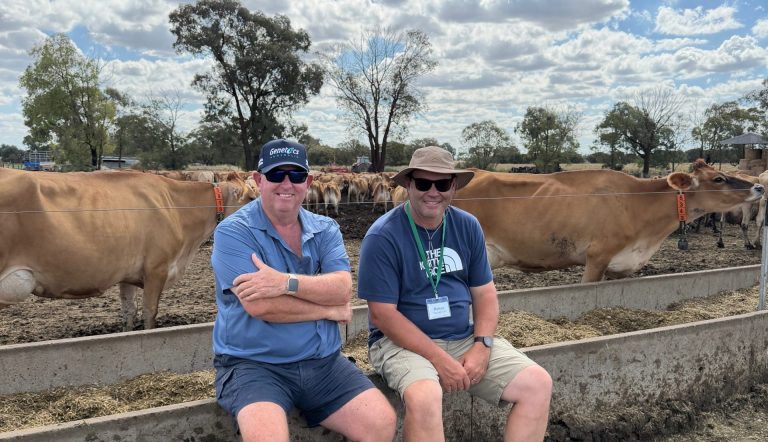
More than half of South African dairy farmer Rohan Herselman’s 2500 Jersey cows come from Australian semen and the percentage is set to grow. Rohan and a group of South African farmers recently joined semen sales person and Jersey specialist for CRV Xseed Robert Bosch on a tour of Victorian farms hosted by Genetics Australia. […]

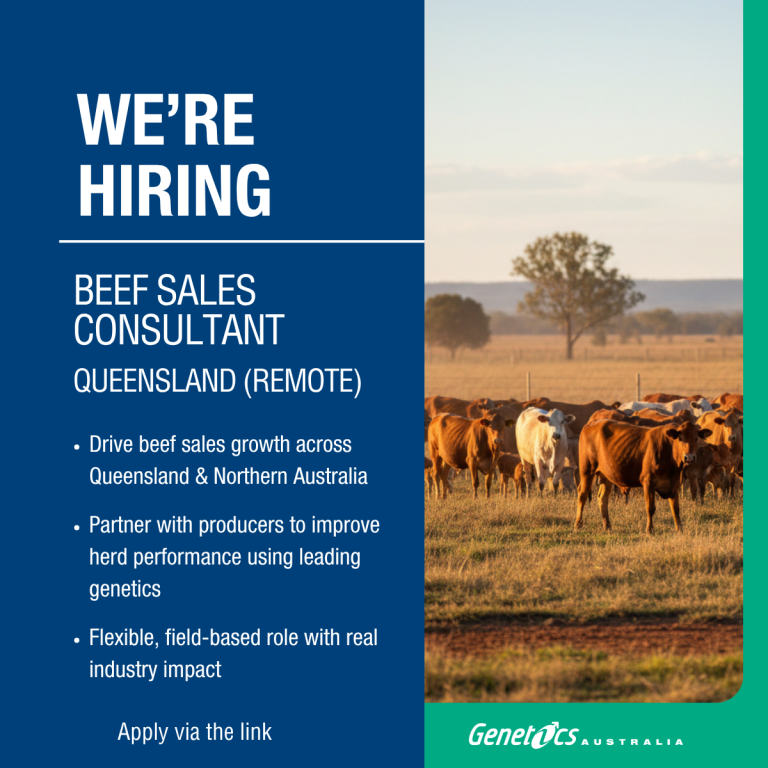
WE’RE HIRING: Beef Sales Consultant

Are you passionate about the future of beef production and ready to combine your commercial drive with technical expertise? Join Genetics Australia and play a pivotal role in helping producers improve herd performance, profitability, and long-term sustainability. Apply now! Drive beef sales growth across Queensland & Northern Australia Partner with producers to improve herd performance […]

Harnessing AI to Transform Agriculture

For farmers, AI has traditionally referred to artificial insemination but the new form of AI – artificial intelligence – has the potential to transform agriculture. Co-founder of Audacious Agriculture Stuart Austin says AI could be a game changer for farmers who will have easier and quicker access to data and new imaging opportunities. Mr Austin […]

GA 2026 Conference: South Gippsland Farmer Continues Mentorship Journey

Kate Kirk admits she was a total novice when she was introduced to dairy farming. At the time, Kate was working in a Leongatha supermarket in South Gippsland. Her then boyfriend, share farmer Jason Kirk whose family had two farms at Loch, needed to find a new worker when his sister moved on to run […]

Genetics Australia Beef Forum, GA Beef Forum 2022

Genetics Australia Beef Forum 2026: Angus Genetics in Northern Australia

Research into how Angus cattle are being better prepared to cope with northern Australian conditions will be presented at a forum in Emerald next month. Angus Australia extension officer Brad Hine will deliver a research, development and extension update on Angus in the North at Genetics Australia’s beef forum at Emerald, Queensland on March 11. Dr […]

GA 2026: Conference To Focus On Cattle Breeding Innovation

A conference in Geelong next month will show Australian cattle breeders how new technologies and innovations can shape the future of their herds and businesses. The GA 2026 Today, Tomorrow and Beyond conference hosted by Genetics Australia on March 17-18 will feature local and international speakers, farmers and dairy and beef industry leaders. The conference […]

Backing a vital system

In taking on national responsibility for the Genex HerdMonitor in Australia, Jon Down knows he’s backing a good thing. “I want to be part of a product that makes a difference for farmers,” he says. “It’s a struggle to get good staff and technology is filling that gap, and on top of that, staff want […]

New bull honours Greg Tiller

Gippsland farmer Daryl Hoey has had numerous bulls into the AI system, but his latest addition is something special. GT, which is joining the Genetics Australia Jersey portfolio this spring, has been named in honour of Daryl’s great mate, Greg Tiller. While it’s a bittersweet moment, it also gives Daryl great pride to recognise the […]

Genetics Australia re-accredited for China exports 

Australian semen and embryos will soon be exported to China for the first time in more than four years in a major coup for the local industry.  Genetics Australia (GA), including subsidiary Total Livestock Genetics (TLG), has been granted official re-accreditation to export both bovine semen and embryos to China, re-opening a potentially huge market […]

Media Release: Trans Ova Launching in Australia

Camperdown VIC, Australia – On July 1, 2025, Trans Ova Genetics, the global leader in bovine reproductive technologies, will officially launch in Australia in conjunction with Total Livestock Genetics (TLG) in Camperdown, Victoria, Australia, marking a major step in global livestock reproduction innovation. For the first time, Australian cattle producers will benefit from the advanced […]