Australia’s interest and knowledge in beef-on-dairy – crossing beef sires over dairy cows – is rapidly expanding.
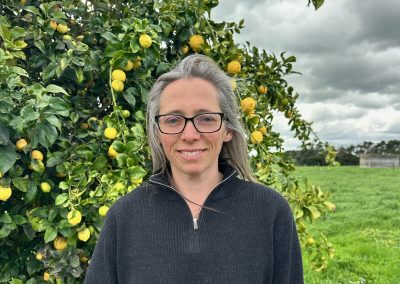
Research scientist at Agriculture Victoria, Dr Jo Newton, spoke on the role of genetic improvement in creating greater integration between dairy and beef industries at the GA 2024 conference, pondering the question “will we soon be eating beef-dairy burgers?’’
Jo spent three months in 2023 on an international study tour looking into the issue.
“Successful beef-on-dairy integration is a wicked problem,” she said. “There are many puzzle pieces and stakeholders that need to work together to arrive at successful integration. Genetics is one of these pieces that can help to deliver a dairy-beef animal that meets the needs of the beef supply chain.”
Jo said growth in beef-on-dairy created opportunity for more sustainable pathways for non-replacement dairy calves.
However, she said more data was needed to identify bulls capable of performing across the supply chain
“The lack of beef-on-dairy data in Australia is limiting our ability to validate existing tools and develop new tools suited to Australia,” she said. “Successful beef-on-dairy integration requires a collaborative approach. It is a multi-faceted challenge but I think it’s a fantastic opportunity.”
Jo said data and case studies under Australian conditions were needed to show what performance could be expected from using good beef genetics in dairy cows.
Her study tour focused on important traits to consider, tools being used to inform decisions and potential gaps.
Use of sexed dairy semen and beef semen is increasing worldwide, along with a decline in conventional semen. In the UK last year, more than 50 per cent of semen sales to dairy herds were beef semen.
By comparison, one third of 595,000 beef semen straws sold in Australia in 2022 went into dairy cows but Jo predicted that could exceed one million if the sectors could be successfully integrated.
“The use of beef genetics, sexed semen and female genotyping go hand-in-hand. If we’re going to use sexed semen to breed herd replacements, we want to make sure we’re targeting that to our highest genetic merit cows and heifers.
“The evolution in dairy breeding programs is well underway. There are opportunities for next generation of mating tools that support the allocation of multiple semen types and consider both the genetics of the cow and her history in the herd.”
Jo said the path of a calf to a dinner plate had many possible routes and it is important to consider how calves perform throughout the supply chain.
“Traits valued in the supply chain differ,” she said. “Calving ease is the number one trait dairy farmers look for, then other fertility traits, but the rest of the supply chain isn’t chasing calving traits.
“Selecting beef bulls based on calving ease information from beef herds only is not enough to meet the needs of the rest of the supply chain.
“Selection indices will be needed to identify sires whose progeny can perform well? across the whole supply chain. We will need to pick bulls that deliver for the beef supply chain without compromising calving ease on farm.”
Jo said there are opportunities to expand Australia’s dairy-beef progeny data sources to validate existing tools or determine if new tools need to be developed for the local market.
“We need to establish pipelines to collect data on the progeny and get the farmer thinking about the needs of the retail supply chain.
“Diverse integrated supply chains are popping up overseas using superior terminal beef genetics, and we are starting to see sales catalogues mentioning beef on dairy.
“In Ireland, calves are being sold alongside estimates of their beef genetic merit.”