
loader image

Making the most of assisted reproduction

Jun 25, 2020

A fixed time insemination program is the most cost-effective way to achieve more artificial pregnancies if the semen isn”t too expensive.

But for those wanting to get the most out of the reproductive technology, following some quality assurance protocols can help limit pregnancy rate losses.

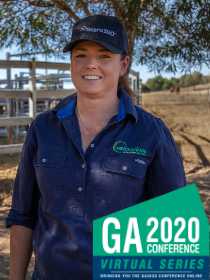
Vetoquinol Australia and New Zealand business unit manager Dr Sophia Edwards gave practical tips to dairy and beef producers about using fixed time AI as part of the 2020 Genetics Australia online conference.

Dr Edwards said fixed time AI was actually ‘quite simple’ and ensuring optimal results was about planning and management at each step of the process.

‘There”s pre- mating management, you might be considering vaccinations for reproduction loss, and nutrition – certainly ensuring animals are on a rising plane of nutrition and have a good body condition score,’ she said.

‘Then there is the synchronisation treatments, making sure you have the correct protocol, you are giving the right doses according to your herd. There”s the element of semen quality, the collection and management of that semen and there”s the insemination itself. Ensuring you have a technician that is experienced and doing a good job and… post-mating management, ensuring again, that the nutrition is managed forward and ensuring the health of those females.’

Using Angus Sire Benchmarking data out of South America, Dr Edwards showed how fixed time AI not only ensured more calves were born earlier in the season, these calves would also be up to 38kg heavier at weaning.

She said those born via the fixed time AI program were 205 days old at weaning, 19 to 24 days older than naturally sired calves. ”In a beef situation earlier calves are heavier, and more weight equals more dollars,’ she said.

This study also demonstrated there were 8 per cent more pregnancies for those animals exposed to fixed time AI, than other ways of joining. This was because early synchronisation offered cows opportunities for return heats and the program also helped remedy the non-cycling animals.

In a 450-cow dairy herd in northern Victoria, the average calving date was 12 days earlier thanks to fixed time AI.

Twenty days into the calving season, assuming all cows have the same gestation, this represents a 121 per cent increase in production at the start of the season, Dr Edwards said. At the end of the season this translated to 19.8 per cent more milk.

Looking at the future of reproduction technologies, Dr Edwards explained the concept of surrogate sires- where one bull ejects the sperm cells of a higher genetic merit animal. She said this could be used to introduce new genetics into herds via tropically adapted bulls.

Dr Edwards also predicted a rise in the use of ‘big data’ in the breeding industry, the technologies of genomics and assisted reproduction merging and animal ‘wearable’ technologies would become common management.
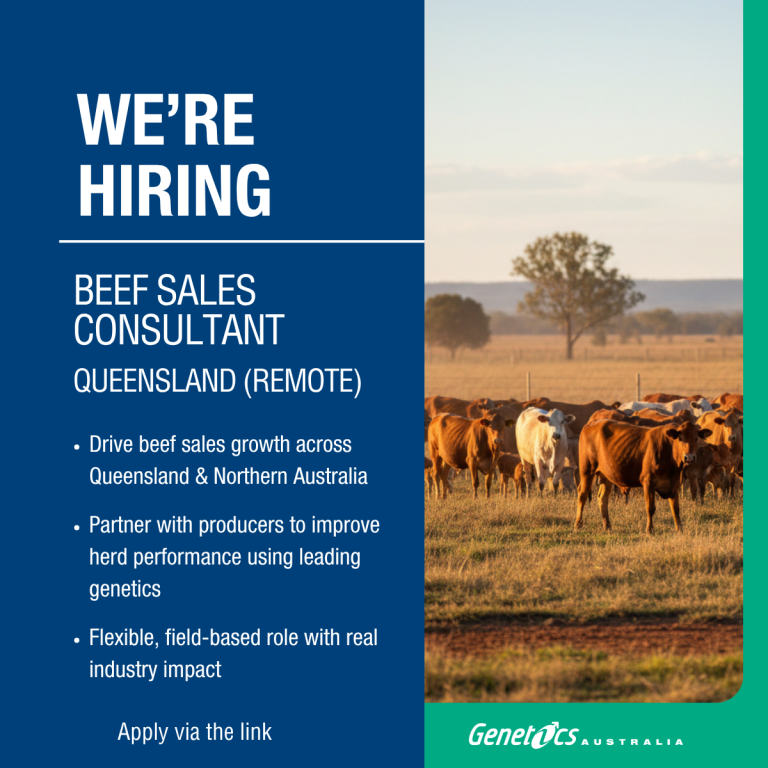
WE’RE HIRING: Beef Sales Consultant

Are you passionate about the future of beef production and ready to combine your commercial drive with technical expertise? Join Genetics Australia and play a pivotal role in helping producers improve herd performance, profitability, and long-term sustainability. Apply now! Drive beef sales growth across Queensland & Northern Australia Partner with producers to improve herd performance […]

Harnessing AI to Transform Agriculture

For farmers, AI has traditionally referred to artificial insemination but the new form of AI – artificial intelligence – has the potential to transform agriculture. Co-founder of Audacious Agriculture Stuart Austin says AI could be a game changer for farmers who will have easier and quicker access to data and new imaging opportunities. Mr Austin […]

GA 2026 Conference: South Gippsland Farmer Continues Mentorship Journey

Kate Kirk admits she was a total novice when she was introduced to dairy farming. At the time, Kate was working in a Leongatha supermarket in South Gippsland. Her then boyfriend, share farmer Jason Kirk whose family had two farms at Loch, needed to find a new worker when his sister moved on to run […]

Genetics Australia Beef Forum, GA Beef Forum 2022

Genetics Australia Beef Forum 2026: Angus Genetics in Northern Australia

Research into how Angus cattle are being better prepared to cope with northern Australian conditions will be presented at a forum in Emerald next month. Angus Australia extension officer Brad Hine will deliver a research, development and extension update on Angus in the North at Genetics Australia’s beef forum at Emerald, Queensland on March 11. Dr […]

GA 2026: Conference To Focus On Cattle Breeding Innovation

A conference in Geelong next month will show Australian cattle breeders how new technologies and innovations can shape the future of their herds and businesses. The GA 2026 Today, Tomorrow and Beyond conference hosted by Genetics Australia on March 17-18 will feature local and international speakers, farmers and dairy and beef industry leaders. The conference […]

Backing a vital system

In taking on national responsibility for the Genex HerdMonitor in Australia, Jon Down knows he’s backing a good thing. “I want to be part of a product that makes a difference for farmers,” he says. “It’s a struggle to get good staff and technology is filling that gap, and on top of that, staff want […]

New bull honours Greg Tiller

Gippsland farmer Daryl Hoey has had numerous bulls into the AI system, but his latest addition is something special. GT, which is joining the Genetics Australia Jersey portfolio this spring, has been named in honour of Daryl’s great mate, Greg Tiller. While it’s a bittersweet moment, it also gives Daryl great pride to recognise the […]

Genetics Australia re-accredited for China exports 

Australian semen and embryos will soon be exported to China for the first time in more than four years in a major coup for the local industry.  Genetics Australia (GA), including subsidiary Total Livestock Genetics (TLG), has been granted official re-accreditation to export both bovine semen and embryos to China, re-opening a potentially huge market […]

Media Release: Trans Ova Launching in Australia

Camperdown VIC, Australia – On July 1, 2025, Trans Ova Genetics, the global leader in bovine reproductive technologies, will officially launch in Australia in conjunction with Total Livestock Genetics (TLG) in Camperdown, Victoria, Australia, marking a major step in global livestock reproduction innovation. For the first time, Australian cattle producers will benefit from the advanced […]

Introducing Cathy Cole  

Sales Representative – Gippsland, Genetics Australia  We are pleased to announce that Cathy Cole has joined the Genetics Australia team in the role of Sales Representative for Gippsland, bringing over three decades of experience across dairy reproduction, animal health, and agribusiness.  In her role with Genetics Australia, Cathy’s focus is on building strong relationships with […]