

Plenty of benefits using the Horizon Genomic Program
Genomic bulls are providing a cost-effective option for dairy farmers who don”t want to compromise their herd”s genetic gain.
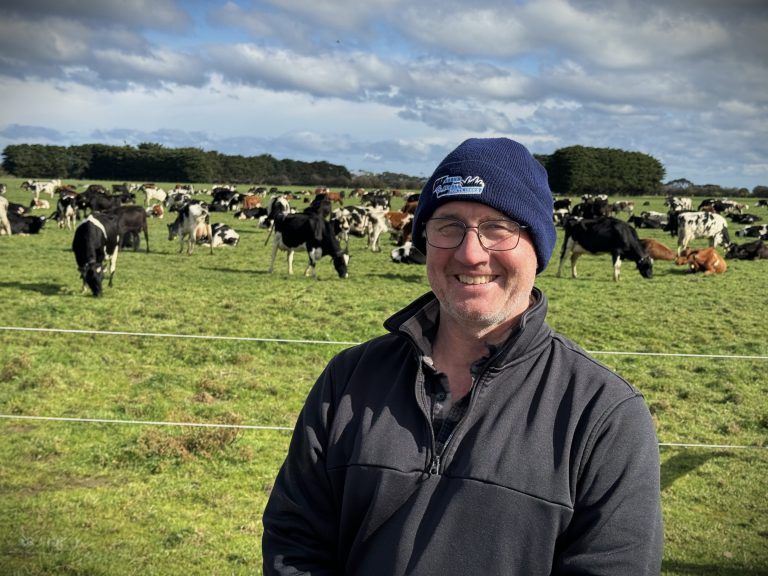
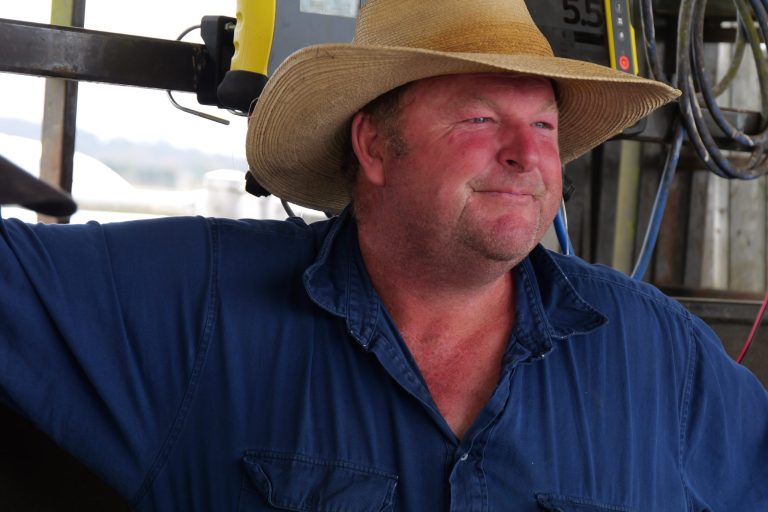
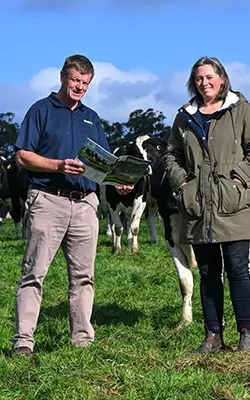
Just ask south west Victorian dairy farmer Eddie Kenna.
More than 10 years ago, Mr Kenna changed his semen purchasing habits and slashed his costs by up to 75 per cent.
Semen from proven sires was replaced by the less expensive and much younger progeny test sires.
This business decision was in response to a tough season, but the tactic has remained a crucial part of cost control and genetic improvement at his 800-cow farm called “Fernlea Park” at The Sisters.
Now he uses genomic semen as part of the Genetics Australia Horizon Genomic Program, purchasing up to 1200 straws, averaging $12 a straw and this move is paying financial dividends.
‘It is a cost saving, but the other advantage is that you are ahead,’ he said. ‘Because, the genomic semen is from relatively young and up-and-coming bulls, years before they are proven. You are sort of gaining that two-to-three-year advantage. If you wait for that bull to become proven, it”s a few years behind.’
Using genomic sires is also less risky than the old progeny test semen, according to Mr Kenna, as the new technology is more accurate at determining a bull”s genetic value at a young age.
‘There probably would have been dud bulls with the progeny test program, but the insurance for that was not using a lot of the same bull,’ he said. ‘That was the early days, before genomics came in, but now the reliability is so much higher with genomics, that is not going to happen now.’
Mr Kenna runs a three-way-cross herd with Genetics Australia”s Horizon Program the base of his breeding program.
The Horizon Program provides random semen from genomically tested sires to selected dairy farmers in a bid to promote and develop new bulls.
Mr Kenna said the program takes the hassle out of selecting quality bulls for joining.
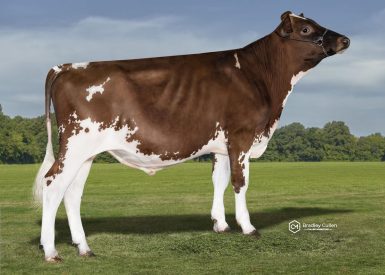
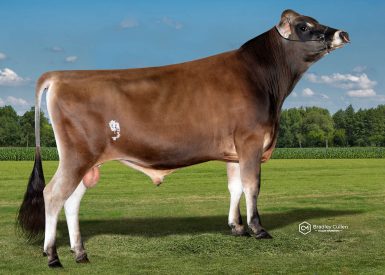
‘In the early days, it was pretty simple a Holstein got a Jersey and jersey got a Holstein, with the second cross being a Red,’ he said. ‘Now all 90 per cent of the herd would have all three breeds in them, it has gotten tricker, but we breed back to the least prominent breed.’
Whole farm benchmarking analysis drives on-farm decision making for Mr Kenna.
‘We determine a good herd by our financials,’ he said. The herd”s production performance, kilograms of milk solids per cow and as a percentage of liveweight. Then we look at fertility analysis. We run production at about 112 per cent of body weight and have a 77 per cent six-week-in calf rate.’